
Home >> Topics >> Equilibrium
Unattempted Questions
Questions Available: 28
Year: 2025
Topic: Equilibrium
1.
For the reaction \(A\left(g\right) \rightleftharpoons 2B\left(g\right)\), the backward reaction rate constant is higher than the forward reaction rate constant by a factor of 2500, at 1000 K.
[Given : R = 0.0831 L atm mol-1 K-1]Kp for the reaction at 1000 K is
[Given : R = 0.0831 L atm mol-1 K-1]Kp for the reaction at 1000 K is
Solution
Solution

Solution
Solution
Year: 2025
Topic: Equilibrium
5.
Phosphoric acid ionizes in three steps with their ionization constant values
\(Ka_1\), \(Ka_2\), and \(Ka_3\), respectively,while K is the overall ionization constant.
Which of the following statements are true?
A. \(\text{log} K\) = \(\text{log} Ka_1\) + \(\text{log}Ka_2\) +\(\text{log}Ka_3\)
B. \(H_3PO_4\) is a stronger acid than \(H_2PO_4^-\) and \(HPO_4^{2-}\).
С. \(Ka_1\) > \(Ka_2\) > \(Ka_3\).
D. \(\displaystyle Ka_1\,= \,\frac{Ka_3\,+\,Ka_2}{2}\).
Choose the correct answer from the options given below:
\(Ka_1\), \(Ka_2\), and \(Ka_3\), respectively,while K is the overall ionization constant.
Which of the following statements are true?
A. \(\text{log} K\) = \(\text{log} Ka_1\) + \(\text{log}Ka_2\) +\(\text{log}Ka_3\)
B. \(H_3PO_4\) is a stronger acid than \(H_2PO_4^-\) and \(HPO_4^{2-}\).
С. \(Ka_1\) > \(Ka_2\) > \(Ka_3\).
D. \(\displaystyle Ka_1\,= \,\frac{Ka_3\,+\,Ka_2}{2}\).
Choose the correct answer from the options given below:
Solution
Year: 2025
Topic: Equilibrium
6.
Higher yield of NO in
\(N_2\left(8\right)\, +\, O_2\left(g\right)\, \rightleftharpoons\, 2NO\left(g\right)\) can be obtained at
[\(\Delta H\) of the reaction = +180.7 kJ mol-1]
A. higher temperature
B. lower temperature
C. higher concentration of N2
D. higher concentration of O2
Choose the correct answer from the options given below:
\(N_2\left(8\right)\, +\, O_2\left(g\right)\, \rightleftharpoons\, 2NO\left(g\right)\) can be obtained at
[\(\Delta H\) of the reaction = +180.7 kJ mol-1]
A. higher temperature
B. lower temperature
C. higher concentration of N2
D. higher concentration of O2
Choose the correct answer from the options given below:
Solution
Solution
Solution
Year: 2024
Topic: Equilibrium
9.
Consider the following reaction in a sealed vessel at equilibrium with concentrations of
\(\text{N}_2\,=\,3.0 \times 10^{-3}\text{M}\),
\(\text{O}_2\,=\,4.2 \times 10^{-3}\text{M}\),
\(\text{NO}\,=\,2.8 \times 10^{-3}\text{M}\),
\(2\text{NO}\left(g\right)\,\rightleftharpoons\, \text{N}_2\left(g\right)\,+\, \text{O}_2\left(g\right)\),
If \( 0.1\text{molL}^{-1}\) of \(\text{NO}\left(g\right)\) is taken in a closed vessel, what will be degree of dissociation \(\left(\alpha\right)\) of \(\text{NO}\left(g\right)\) at equilibrium?
\(\text{N}_2\,=\,3.0 \times 10^{-3}\text{M}\),
\(\text{O}_2\,=\,4.2 \times 10^{-3}\text{M}\),
\(\text{NO}\,=\,2.8 \times 10^{-3}\text{M}\),
\(2\text{NO}\left(g\right)\,\rightleftharpoons\, \text{N}_2\left(g\right)\,+\, \text{O}_2\left(g\right)\),
If \( 0.1\text{molL}^{-1}\) of \(\text{NO}\left(g\right)\) is taken in a closed vessel, what will be degree of dissociation \(\left(\alpha\right)\) of \(\text{NO}\left(g\right)\) at equilibrium?
Solution
Solution
Solution
Solution

Solution
Solution
Solution
Solution
Solution
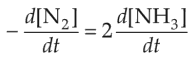
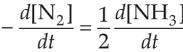


Solution
Solution
Year: 2018
Topic: Equilibrium
20.
Following solutions were prepared by mixing different volumes of NaOH and HCl of different concentrations:
A. \( \text{60 mL} \frac{\text{M}}{\text{10}}\)HCl + \( \text{40 mL} \frac{\text{M}}{\text{10}}\)NaOH
B. \( \text{55 mL} \frac{\text{M}}{\text{10}}\)HCl + \( \text{45 mL} \frac{\text{M}}{\text{10}}\)NaOH
C. A. \( \text{75 mL} \frac{\text{M}}{\text{5}}\)HCl + \( \text{25 mL} \frac{\text{M}}{\text{5}}\)NaOH
D. \( \text{100 mL} \frac{\text{M}}{\text{10}}\)HCl + \( \text{100 mL} \frac{\text{M}}{\text{10}}\)NaOH
pH of which one of them will be equal to 1 ?
A. \( \text{60 mL} \frac{\text{M}}{\text{10}}\)HCl + \( \text{40 mL} \frac{\text{M}}{\text{10}}\)NaOH
B. \( \text{55 mL} \frac{\text{M}}{\text{10}}\)HCl + \( \text{45 mL} \frac{\text{M}}{\text{10}}\)NaOH
C. A. \( \text{75 mL} \frac{\text{M}}{\text{5}}\)HCl + \( \text{25 mL} \frac{\text{M}}{\text{5}}\)NaOH
D. \( \text{100 mL} \frac{\text{M}}{\text{10}}\)HCl + \( \text{100 mL} \frac{\text{M}}{\text{10}}\)NaOH
pH of which one of them will be equal to 1 ?
Solution
Solution
Solution
Year: 2017
Topic: Equilibrium
23.
The equilibrium constants of the following are:
N2 + 3H2 \(\rightleftharpoons\) 2NH3 ------ K1
N2 + O2 \(\rightleftharpoons\) 2NO ------ K2
H2 + \(\frac{\text{1}}{\text{2}}\)O2 \(\rightarrow \) H2O ------ K3
The equilibrium constant (K) of the reaction:
2NH3 + \(\frac{\text{5}}{\text{2}}\)O2 \(\rightleftharpoons\) 2NO + 3H2O, will be
N2 + 3H2 \(\rightleftharpoons\) 2NH3 ------ K1
N2 + O2 \(\rightleftharpoons\) 2NO ------ K2
H2 + \(\frac{\text{1}}{\text{2}}\)O2 \(\rightarrow \) H2O ------ K3
The equilibrium constant (K) of the reaction:
2NH3 + \(\frac{\text{5}}{\text{2}}\)O2 \(\rightleftharpoons\) 2NO + 3H2O, will be
Solution
Solution
Year: 2017
Topic: Equilibrium
25.
A 20 litre container at of 400 K contains CO2(g) at pressure 0.4 atm and an excess SrO (neglect the volume of solid SrO). The volume of the containers is now decreased by moving the movable piston fitted in the container. The maximum volume of the container, when pressure of CO2 attains its maximum value, will be
[Given : SrCO3(s) \(\rightleftharpoons\) SrO(s) + CO2 (g).
K = 1.6 atm]
[Given : SrCO3(s) \(\rightleftharpoons\) SrO(s) + CO2 (g).
K = 1.6 atm]